 What was the hidden cost behind the convenience of the humble matchstick? In this post, a Youth STEMM Award participant explores the history and science of ‘phossy jaw’, a devastating disease that affected match factory workers during the Industrial Revolution.
The Industrial Revolution
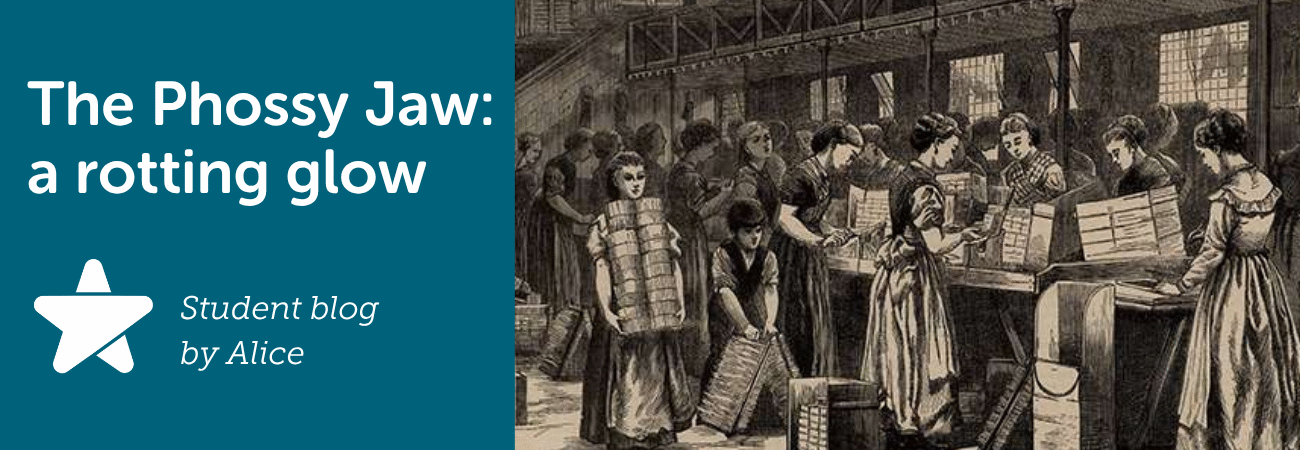
The Industrial Revolution is often celebrated as an era of rapid technological development. However, underneath the surface of success lies a sinister reality of severe worker exploitation, including Chimney Sweepers, Mudlarks and hours of gruelling manual work for a small wage. One of the most horrific examples of the costs of such intense labour was the Phossy Jaw; a severe, disfiguring bone disease that came with the “Matchgirls” of the 19th century and early 20th century. By examining the history of what the Matchgirls have gone through to make ends meet, we will be able to discover how bone biochemistry weaves into social history and corporate negligence of the time.
Brighter Lights
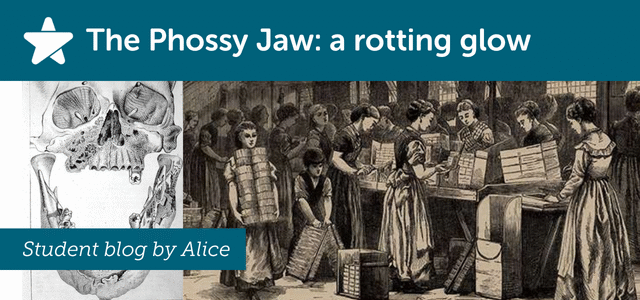
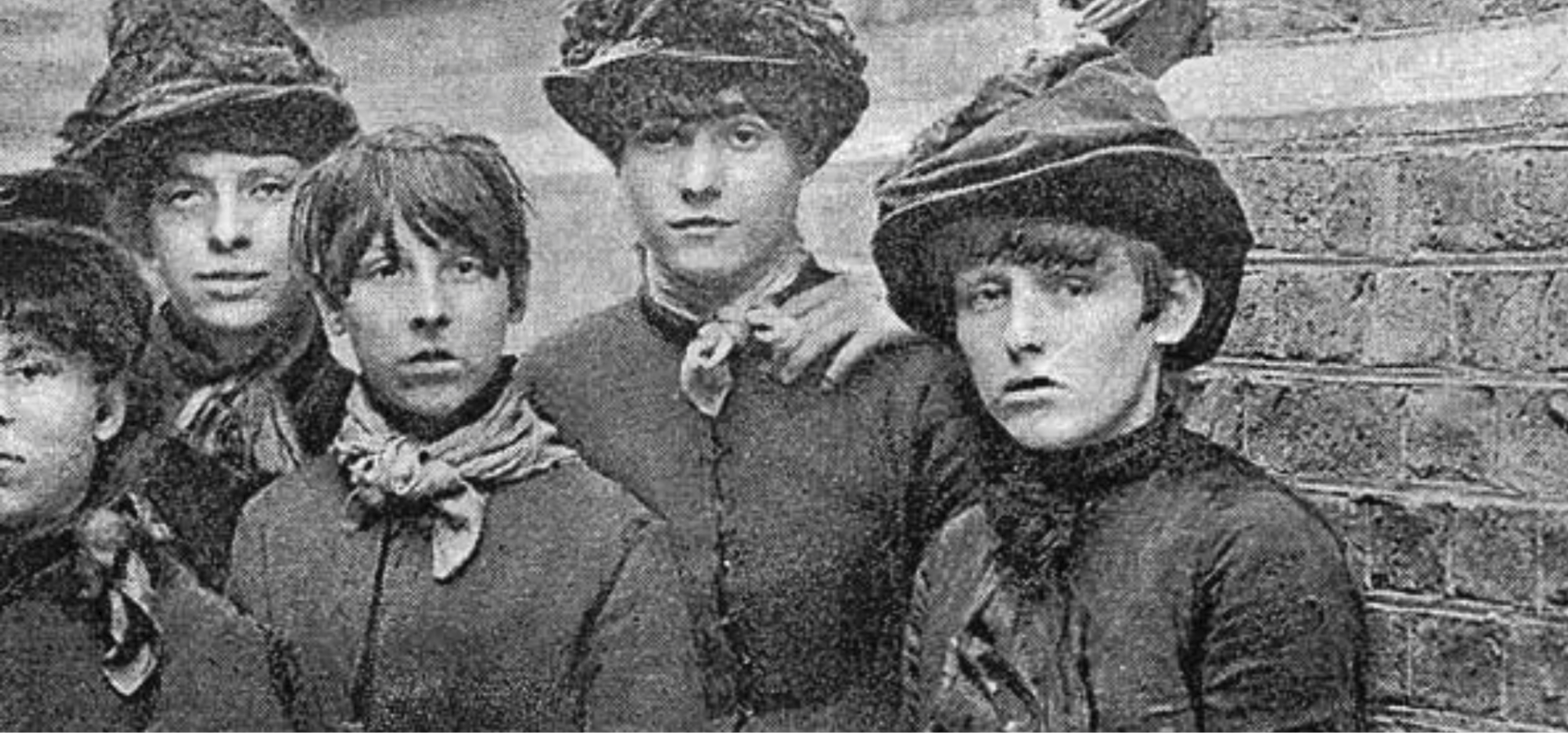
In the early 19th century, manufacturers discovered that, by white (also known as yellow) phosphorus to matchstick heads, people would be able to light matches more easily. After manufacturing this idea and presenting them to the public, the global demand for “strike-anywhere” Lucifer matches was extremely high, creating a profitable trade. As demand increased, thousands of people were employed in factories such as Bryant & May in London’s East End to create a suitable stock. However, the workforce was composed of mainly poor women and teenage girls, many of whom were as young as 14 years old. Joining the long working hours of up to 14 hours a day were the overcrowded and poorly ventilated spaces many Matchgirls were forced to endure. Above all, the primary danger came from the raw white phosphorus, which is a highly volatile substance composed of four phosphorus atoms. They may have not noticed it, however, as the Matchgirls dipped the splints into the heated phosphorus paste, the chemical filled the air with toxic vapour and coated their hands. As this continued, the business became the foundation of a medical tragedy.
Clinical Symptoms
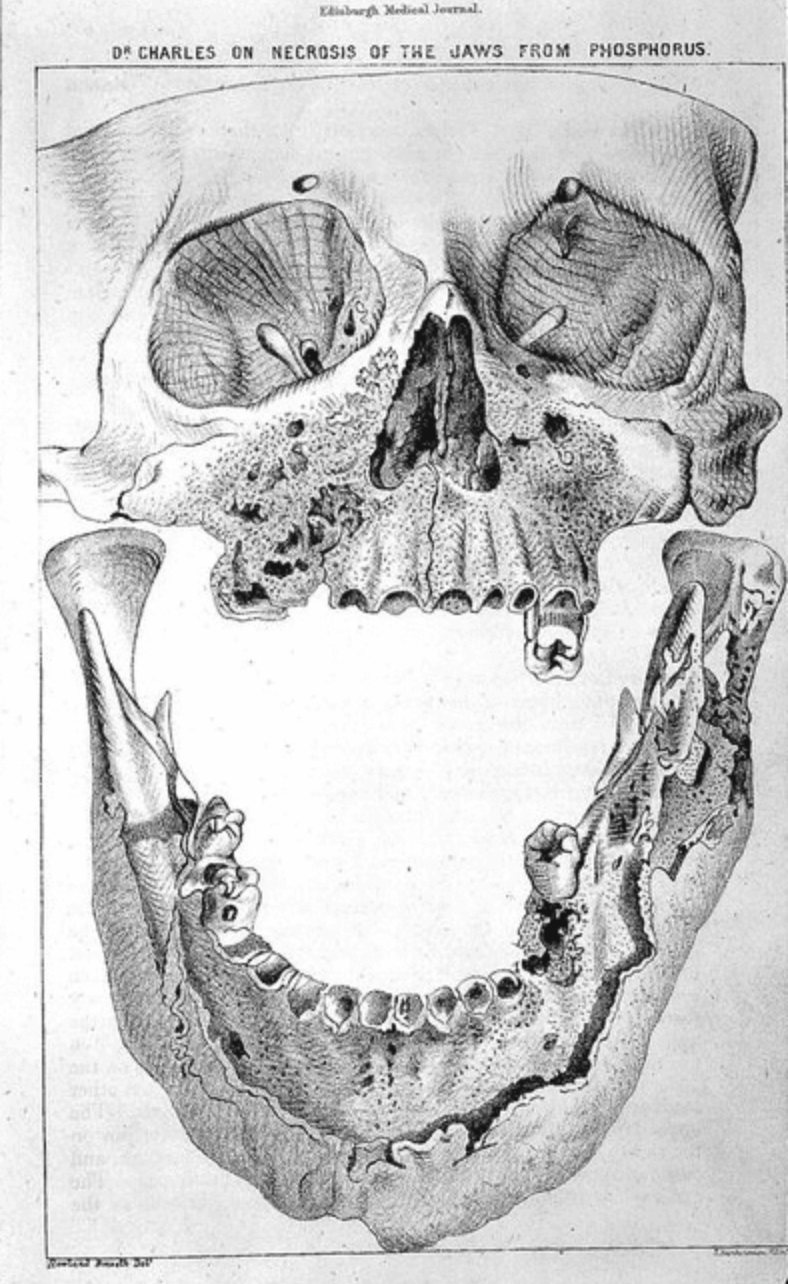
Medically known as Phosphorus Necrosis of the Jaw, the Phossy Jaw was notorious for causing slow, agonizing pain. An example of the progression of the illness was documented by Dr. James Rushmore Wood’s 1857 article of a 16-year-old factory worker named Cornelia, which outlined the typical symptoms of the illness. Primarily, the condition would begin with a dull, red discoloration of the gingival mucosa (the gums) followed by severe toothaches and facial swelling. To relieve the pressure, doctors would extract the teeth or lance the gums. Nonetheless, since the underlying bone was weakened, the extraction sockets failed to heal. Consequently, abscesses formed throughout the mouth, breaking through the skin to form openings beneath the jawline that continuously discharged pus. After this stage, the patient’s condition would gradually become physically noticeable, beginning with their breath. The affected area would emit a phosphorescent greenish-white glow in the dark due to the exposure to white phosphorus. Eventually, the disease would continue to disfigure the patient’s face and even contribute to fatal brain damage, in the case that chronic infection spreads.
Phosphorus and the Jawbone
Why did white phosphorus target the jawbone while leaving the rest of the skeletal system intact? This question is answered by the unique environment of the human mouth and the system of bone biology. Acknowledging that bones are living tissues, they often undergo a continuous cycle of bone remodelling. Within healthy bodies, specialized cells named osteoclasts break down old or damaged bone as osteoblasts construct new, healthy bone. Under normal circumstances, this cycle is the foundation of ensuring strong bones. In spite of this, the jawbone (specifically the alveolar bone) has a drastically higher bone remodelling rate than other bones in the body due to the constant mechanical stress of chewing or micro-traumas caused by dental issues. As the matchmakers were constantly inhaling phosphorus vapours and handling toxic paste, the chemical entered through the gum line. Once absorbed into the alveolar tissue, the phosphorus compounds could disrupt the blood supply and damage surrounding tissues. With the blood and remodelling cycle disrupted, the jawbone would start to die (osteonecrosis), leaving behind porous, irregular fragments of dead bones, also known as sequestra. These pieces of dead bone were heavily chemically eroded to the extent that pathologists would note that they looked like clinkers from a coal furnace.
A Public Outrage
The Matchgirls’ tragedy was severely exacerbated by corporate greed and cover-ups. Companies, such as Bryant & May, actively hid cases of phosphorus poisoning from factory inspectors to protect their profits. This resulted in them receiving a fine of merely £25 when their negligence was exposed. Notwithstanding this, the public outrage and social resistance, driven by Annie Besant’s historic 1888 Matchgirls’ Strike and new non-toxic matches, eventually led to international action against the use of white phosphorus during the 1906 Berne Convention.
Medical Foundation
While the disease largely disappeared following restrictions on the use of white phosphorus in matches, its historical medical significance remains highly relevant to modern pathology. Today, the suffering of the 19th century matchmakers provides a vital foundation for doctors studying Medication-Related Osteonecrosis of the Jaw (MRONJ), a modern condition where bone-density drugs trigger similar bone decay in the jaw. By comparing the two diseases, modern clinicians are able to study crucial characteristics of skeletal health. For instance, while MRONJ causes a distinct thickening of the bone’s structure, the phossy jaw causes the bone to become highly porous and eroded. Ultimately, the matchgirls’ legacy is much more than a dark chapter of the Industrial Revolution but a foundational case study in occupational health that taught modern medicine how social regulation, chemical exposure, and local bone biology are all intertwined.
Works Cited
“‘Phossy Jaw’: An Industrial Horror Story – Hektoen International.” Hekint.org, hekint.org/2022/08/22/phossy-jaw-an-industrial-horror-story/.
Brain, Jessica. “Chimney Sweeps and Climbing Boys.” Historic UK, 7 Apr. 2021, www.historic-uk.com/CultureUK/History-Boy-Chimney-Sweep/.
Devlin, Hugh. “A Historical Review of ‘Phossy Jaw.’” British Dental Journal, vol. 234, no. 11, 2023, pp. 825–26, https://doi.org/10.1038/s41415-023-5859-9.
Hughes, J. P. W., et al. “Phosphorus Necrosis of the Jaw: A Present-Day Study: With Clinical and Biochemical Studies.” Occupational and Environmental Medicine, vol. 19, no. 2, Apr. 1962, pp. 83–99, https://doi.org/10.1136/oem.19.2.83.
Isaac, Susan. “‘Phossy Jaw’ and the Matchgirls: A Nineteenth-Century Industrial Disease.” Royal College of Surgeons, Royal College of Surgeons, 28 Sept. 2018, www.rcseng.ac.uk/library-and-publications/library/blog/phossy-jaw-and-the-matchgirls/.
Kim, Jung-Min, et al. “Osteoblast-Osteoclast Communication and Bone Homeostasis.” Cells, vol. 9, no. 9, Sept. 2020, p. 2073, https://doi.org/10.3390/cells9092073.
“Mudlarks: The Murky World of London’s River Scavengers.” Rmg.co.uk, 2026, www.rmg.co.uk/stories/maritime-history/library-archive/mudlarks-murky-world-londons-river-scavengers.
Schubert, Andrea, et al. “Alterations of Bone Proteins in Medication‐Related Osteonecrosis of the Jaw.” European Journal of Oral Sciences, vol. 133, no. 2, Wiley, Feb. 2025, https://doi.org/10.1111/eos.70003. Accessed 13 June 2026.
Wellcome, Matchgirls. “The 1888 Matchgirls’ Strike.” The National Archives, 14 Mar. 2024, www.nationalarchives.gov.uk/explore-the-collection/stories/1888-matchgirls-strike/#phossy-jaw.
Please note:Our blog posts are written by young people taking part in the Youth STEMM Award. They reflect the research, ideas and understanding of the individual author.
 Alice is a year 9 student from Thailand, currently taking part in the Silver Award. She hopes to one day work in the healthcare industry.